- AKC-standard colors are fawn, cream, white, brindle, and piebald combinations — these are safe choices
- "Rare" colors (blue, merle, lilac) are not recognized by the AKC and carry real health risks
- Merle is not natural to French Bulldogs — introduced via crossbreeding; causes blindness and deafness
- Blue/dilute dogs risk Color Dilution Alopecia — chronic hair loss and skin disease
- A higher price for a "rare" color does not mean a healthier dog — usually the opposite
AKC Standard Colors
The AKC breed standard accepts the following colors and patterns:
Accepted Colors

Fawn
Light tan to deep reddish-brown. The most classic Frenchie color.

Cream
Solid off-white. Black pigment on nose, eye rims, paw pads.

White
Pure white coat. Must have dark pigment. Not albino.
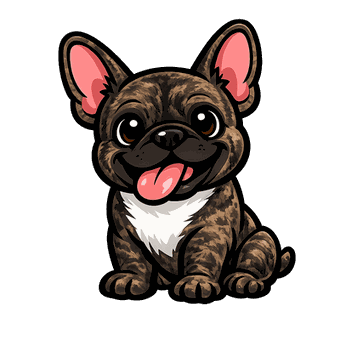
Brindle
Fawn base with black striping. "Tiger brindle" to dark brindle.
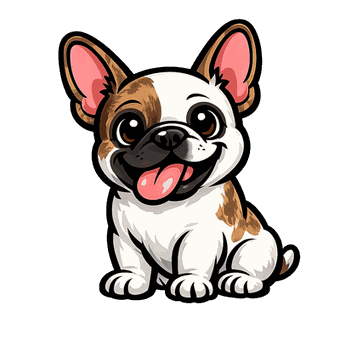
Fawn & White
Fawn with white markings (piebald pattern).
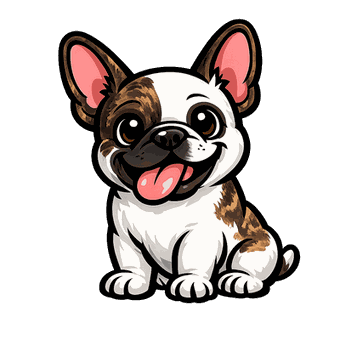
Brindle & White
Brindle patches on a white background (piebald).
Accepted Markings
- Black mask — Dark coloring around the muzzle and face
- Piebald — Patches of color on a white background
- Black shadings — Black-tipped hairs
- White markings — White on chest, feet, face
- Ticked — Small colored spots on white areas
Disqualified Colors (Fad Colors)
The FBDCA strongly warns against breeding for non-standard "fad" colors. These colors often come with serious health risks, are frequently produced by breeders prioritizing profit over health, and cannot be shown in AKC conformation events. A higher price tag does not mean a healthier dog — often the opposite.

Blue (Mouse/Gray)
Risk: Color Dilution Alopecia — genetic hair loss, chronic skin issues.
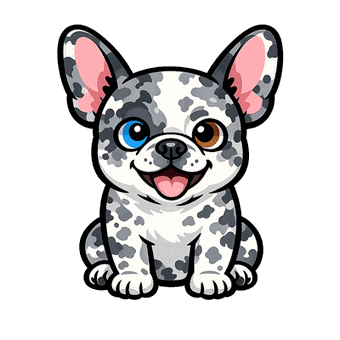
Merle
Risk: Blindness, deafness. NOT natural to the breed — introduced by crossbreeding.

Lilac
Risk: Blue + chocolate dilution combined — double risk of skin problems.

Black & Tan
No specific color-linked risk, but not part of the breed's traditional coloring.
Color Genetics Simplified
Every French Bulldog's coat color is determined by genes inherited from both parents. Here's a simplified overview:
Key Gene Locations (Loci)
| Locus | Controls | Key Variants |
|---|---|---|
| A (Agouti) | Fawn vs. brindle vs. black patterns | Ay (fawn), aw (wild sable), at (tan points), a (solid black) |
| K (Dominant Black) | Whether agouti patterns are expressed | KB (dominant black), kbr (brindle), ky (allows agouti) |
| E (Extension) | Whether black pigment is produced | Em (black mask), E (normal), e (cream/yellow — no black) |
| D (Dilution) | Intensity of pigment | D (full color), d (dilute — creates blue/lilac) |
| S (Spotting) | White patterns | S (solid), sp (piebald — white patches) |
| M (Merle) | Random dilution patches | M (merle), m (non-merle). NOT natural to French Bulldogs. |
How Common Colors Are Made
- Fawn: Ay/Ay or Ay/at at A locus + ky/ky at K locus + E (any) at E locus
- Brindle: Any A locus + kbr at K locus + E at E locus
- Cream: e/e at E locus (masks all other color — no black pigment in coat)
- Blue: d/d at D locus (dilutes black to gray)
- Merle: M at M locus — introduced from other breeds
The Merle Problem
Merle deserves special attention because it's the most controversial and potentially harmful color in French Bulldogs.
- Merle is NOT naturally occurring in French Bulldogs — it was introduced through crossbreeding (likely with Chihuahuas or other merle breeds)
- Single merle dogs may have blue eyes and mottled coats — they can be healthy but carry risks
- Double merle (M/M) — when two merle dogs are bred together, 25% of puppies can be double merle, resulting in severe blindness, deafness, and other developmental defects
- Responsible breed clubs worldwide condemn merle breeding in French Bulldogs
- Some registries refuse to register merle French Bulldogs
Choose a standard color (fawn, cream, brindle, white, or combinations) from a reputable breeder who health-tests their dogs. The color of your Frenchie matters far less than their health. A healthy fawn Frenchie will bring you more joy than an expensive "rare" colored dog with chronic health problems.
Why "Rare" Colors Cost More
Breeders of fad colors often charge $5,000-$50,000+ for "rare" colored puppies. This premium exists because of demand, not quality. In fact:
- Higher prices incentivize breeding for color over health
- "Rare" color breeders are less likely to do comprehensive health testing
- Fad color dogs cannot be shown in AKC conformation
- The same puppy in a standard color from a health-tested line is a better investment
- Veterinary bills from color-linked health issues often exceed the "savings" of a cheaper puppy
Sources & References
- FBDCA — Interpretation of the French Bulldog Standard on Color. FBDCA Color
- FBDCA — French Bulldog Fad Colors Explained. FBDCA Fad Colors
- AKC — Official Standard of the French Bulldog. AKC Standard (PDF)
- Great Lakes French Bulldogs — Color Coded Frenchies: How to Break Down Coat DNA. GLFB